Attractions & Places to Visit in Antwerp
The cultural capital of Flanders, the Dutch-speaking northern area of Belgium, Antwerp is both a bustling industrial port city and an outstanding historic center for Belgian craftwork and artistry.
The city was once home to such famous artists as Rubens, van Dyck, and Jordaens, while centuries of prosperity through trade and commerce have bequeathed an inheritance of architectural beauty, which includes the magnificent cathedral, the town hall, and many other outstanding historical buildings in the old town center.
For art lovers and culture vultures, Antwerp's excellent museums are the main tourist attractions and are a vital stop on any Belgian itinerary.
In particular, the city's paintings – an incomparable collection of 15th- to 17th-century masterpieces from a time when the work of artists of the South Netherlands school attained extraordinary heights – is a highlight of any visit.
Discover the city and the best places to visit with our list of the top attractions and things to do in Antwerp.
- Grand Place (Grote Markt)
- Cathedral of Our Lady
- Rubens' House (Rubenshuis)
- Tour the Museum aan de Stroom (MAS)
- Take the Kids to Antwerp Zoo
- Learn about Chocolate at Chocolate Nation
- Plantin-Moretus Museum
- See the Collection inside Museum Mayer van den Bergh
- Royal Museum of Fine Arts (Koninklijk Museum voor Schone Kunsten)
- Learn about Migration History at the Red Star Line Museum
- St. Paul's Church (Sint-Pauluskerk)
- The Butcher's Hall (Vleeshuis)
- Check Out Antwerp-Centraal Railway Station
- Bike the Havenroute (Port Tour)
- St. James' Church (Sint-Jacobskerk)
- DIVA (The Diamond Museum)
- Antwerp, Belgium - Climate Chart
Grand Place (Grote Markt)
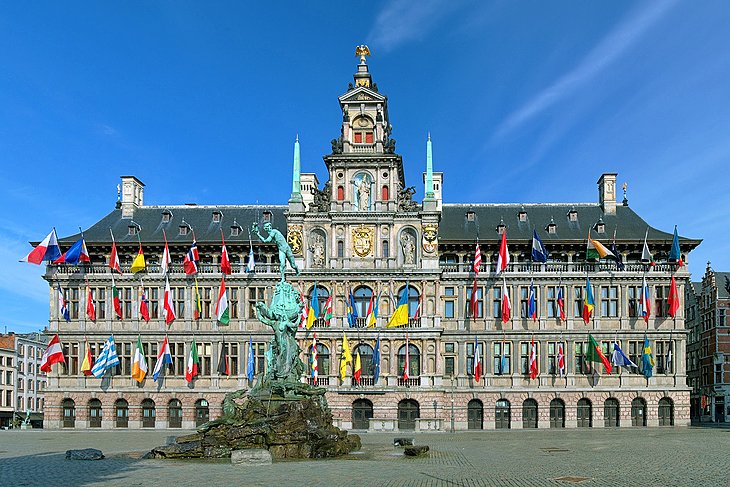
Antwerp's Grand Place (Grote Markt) with its town hall and numerous guild houses is the heart of the old town. In the middle stands the ornate Brabo FountainBrabo erected in 1887 by Jef Lambeaux and depicting the Roman soldier Silvius Brabo tossing the severed hand of the giant Antigonus into the Scheldt.
The Town Hall (or Stadhuis) dominates the plaza's western side and was built by Cornelis Floris de Vriendt between 1561 and 1565. Inside, the rooms are hung with 19th-century paintings by H. Leys illustrating the history of Antwerp.
Apart from the Stadhuis, most of the buildings bordering the Grote Markt are former guild houses (gildehuizen), which originally served as headquarters of the city's 16th- and 17th-century guilds.
Among the most interesting guild houses on the north side are the Gildehuis der Kuipers (Coopers' House No. 5), the Huis van de Schutters (Archer's House No. 7), and the Huis van de Kruideniers (Grocers' House No. 11).
Immediately behind the town hall, in the Gildekamersstraat, a former guild house has been turned into a Folk Museum devoted to the many traditional arts and crafts found in the Antwerp area, while nearby is the Ethnography Museum which highlights non-European cultures.
Address: Grand Place, Central Antwerp
Cathedral of Our Lady
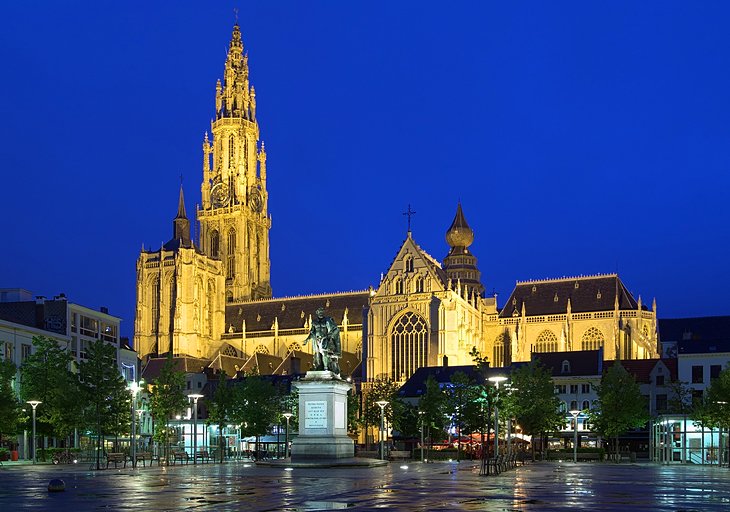
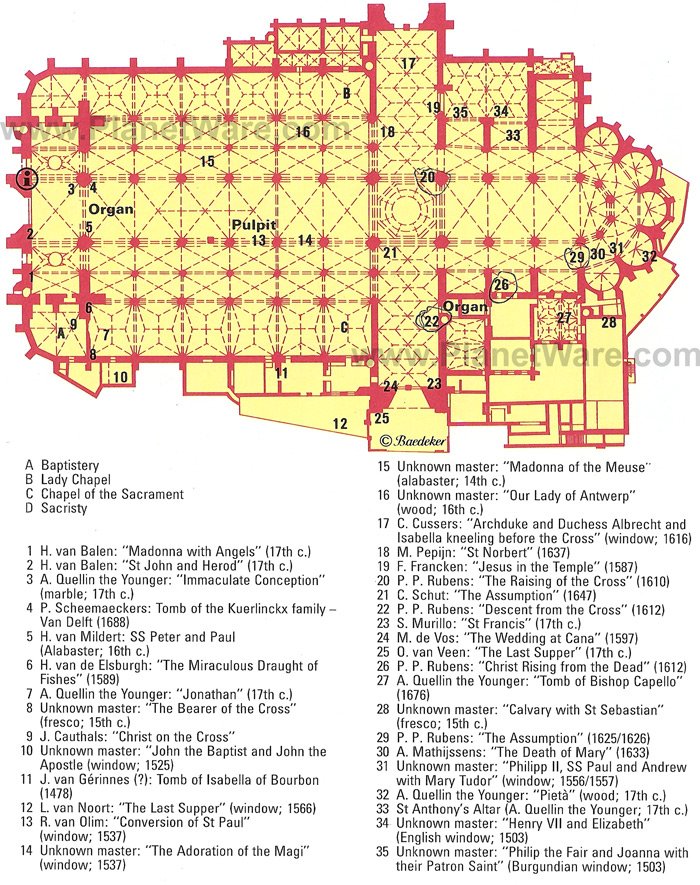
The Cathedral of Our Lady (Onze Lieve Vrouwkathedraal), is Belgium's largest Gothic church.
Work was started on the cathedral in 1352, continuing until 1521. Jacob van Thienen, Pieter Appelmans, Jan Tac, Everaert Spoorwater, Hermann and Dominic de Waghemakere, and Rombout Keldermans were among the architects and master-builders who contributed to its construction.
The church has suffered serious damage on a number of occasions over the years, depriving it of many of its most precious works of art. First came a fire in 1533, then despoliation at the hands of dissident iconoclasts in 1566, Calvinists in 1581, and French Republican troops in 1794 and 1800. Sadly, only a few of the lost treasures have since been recovered.
Restoration of the exterior was begun in the 19th century, and all the carved stonework on the outside of the building is therefore recent. Work on the interior began in 1965, starting with the nave where repairs were completed in 1983.
The finest of the remaining works of art are displayed in the nave and aisles as well as in the cathedral treasury.
Address: Groenplaats 21 / Handschoenmarkt, Central Antwerp
Official site: www.dekathedraal.be
Rubens' House (Rubenshuis)
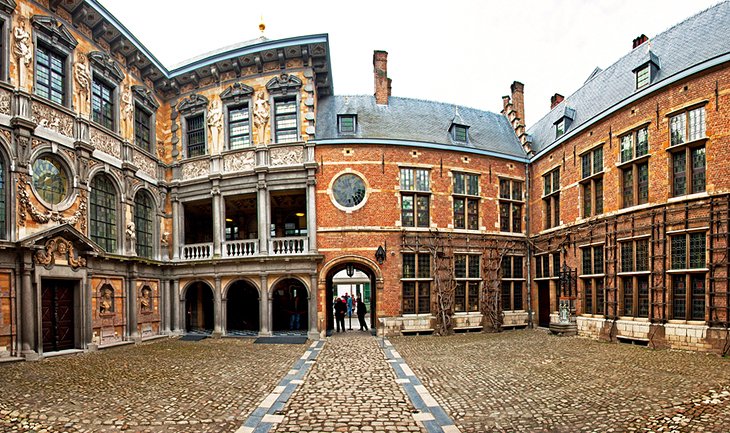
Peter Paul Rubens acquired No. 9 in 1610 – a year after his marriage to Isabella Brant – living there until his death in 1640. He arranged the house to his own taste and requirements, making his home to the left of the entrance and turning the right wing into his studio.
Following the French Revolution it was used as a prison, thereafter falling more and more into disrepair. Rubens' House (Rubenshuis) finally came into the possession of the City of Antwerp in 1937 and, between 1939 and 1946, was meticulously restored with the aid of old documents and drawings.
The 10 rooms are furnished in the style of the period and contain a large collection of paintings by both Rubens and his contemporaries. Among the pieces not to miss are Self-portrait, Adam and Eve, and The Annunciation, all by Rubens; Self-portrait by Anthony van Dyke; and Peasant Drinking by Adriaen Brouwer. The large studio contains several works by Rubens and others by his pupils.
Outside, the formal gardens of the house have been restored carefully to try and closely replicate the garden as it was when Rubens was resident at the house. It's a great spot for a stroll after touring the house.
Address: Wapper 9-11, Antwerp
Official site: https://rubenshuis.be/en
Tour the Museum aan de Stroom (MAS)
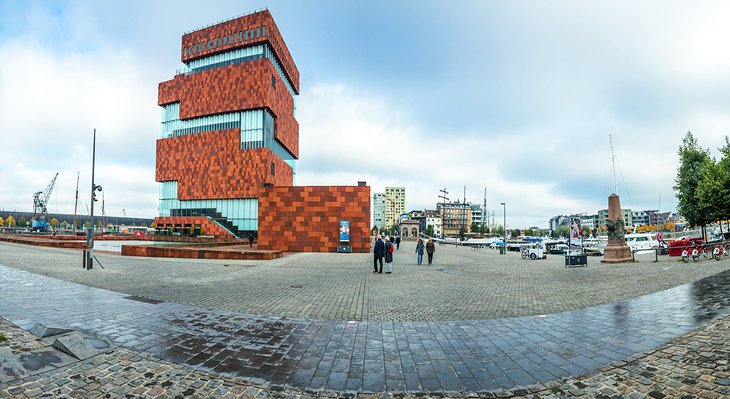
Antwerp's municipal museum is housed in a fine example of modern architecture that features a geometric configuration of variegated stone and wave-shaped glass panels. This 10-story building resembles a child's block puzzle, and sits overlooking the harbor on the former site of the Hanseatic warehouse.
The museum's exhibits include a true variety of topics. Local subjects include a gastronomic history of the city on the 5th floor and a look at Antwerp's former role as the largest trade and shipping port in the world.
The rooftop, which is open on top but enclosed with glass walls, affords tourists a full 360-degree view of the city and the port; here is where you will find the Saluting Admiral Couple sculpture created by local artist Guillaume Bijl.
Additional exhibits focus on international topics, including explorations of mankind's approach to death and spirituality throughout various cultures, as well as the ways that cultures around the world celebrate rites of passage.
The 8th floor is dedicated to one of Europe's largest collections of pre-Columbian American art, focusing on the relationship between the native cultures and their gods.
As well as the permanent collection, MAS regularly hosts a program of temporary exhibitions focused on a wide range of subjects.
The museum also has a unique storage area on the second floor, which allows visitors to view the racks filled with over 180,000 items that have yet to be placed into exhibit space. In total, the museum is home to over 500,000 pieces in its collection.
Address: Hanzestedenplaats 1
Official site: https://mas.be/en
Take the Kids to Antwerp Zoo
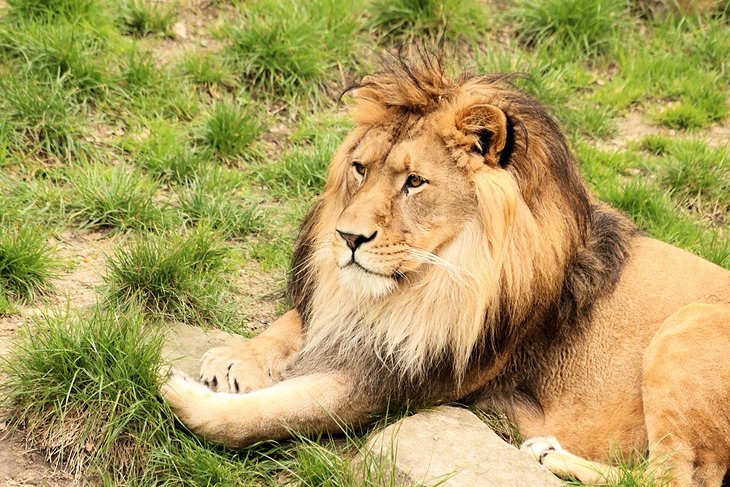
Right in the center of the city, Antwerp Zoo was founded in 1843. It is widely regarded as one of the finest zoos in Europe on account of its variety of species; its success in breeding; the care bestowed on the animals, which are kept in the most natural environment possible; and, last but by no means least, its architecture.
While the Art Déco facades of the entrance area are the first features to catch the eye, inside the zoo are several buildings of note, among them the giraffe and elephant house (1855) in the style of an Egyptian temple.
More than 6,000 animals of 950 species live in the zoo, including rare breeds such as the white rhino, okapi, and mountain gorilla.
If you are visiting Antwerp with kids, at trip to the zoo is one of the top things to do.
Address: Kon. Astridplein 26, Central Antwerp
Official site: www.zooantwerpen.be
Learn about Chocolate at Chocolate Nation

This museum is a treat for visitors with a sweet tooth. Located just across from Antwerp's Central Railway Station, Chocolate Nation is the largest Belgian Chocolate museum in the world.
Visitors are introduced to every step of the process via a multimedia presentation and interactive exhibits, from the cocoa bean's equatorial origins to the final product - which, of course, you can enjoy to your heart's content via samples and the museum shop.
The museum also explores the special place chocolate has within Belgian culture and tradition, as well as the history of the confection's innovations here and in other countries.
Exhibits look at the many ways that chocolate is used and presented, and visitors can even sign up for a chocolate workshop with take-home goodies.
Address: Koningin Astridplein 7, 2018, Antwerp
Official site: https://www.chocolatenation.be/en/
Plantin-Moretus Museum
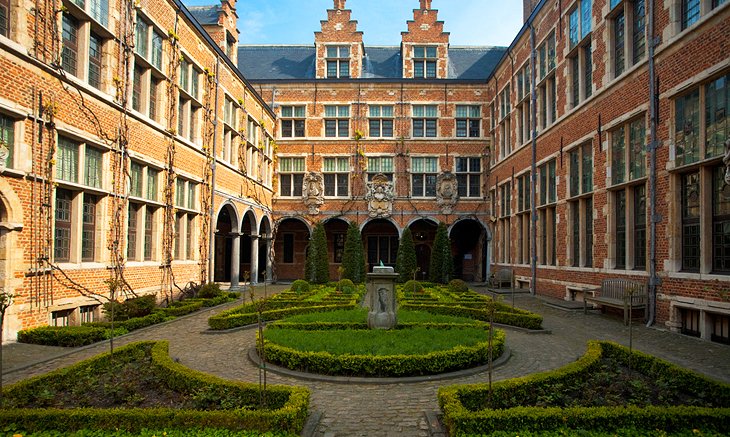
In 1576, Christophe Plantin the printer who hailed originally from France, moved into a house he christened "De gulden Passer" – the Golden Compasses – south of the Grote Markt Grote. The house, lived in by Plantin and his Moretus family heirs is now a supreme example of Flemish Renaissance architecture.
Today, the building is the Plantin-Moretus Museum incorporating the history of printing as well as showcasing the atmosphere of an Old Flemish patrician house.
The original furnishings, wide-ranging exhibits, and above all, the still tangible atmosphere arising from the proximity of home and workplace make this museum one of Antwerp's most fascinating tourist attractions.
If you're short on time, make a beeline for Room 7, devoted to the history of books and the processes involved in their production, from the earliest forms of writing and development of the alphabet – exhibits include important archaeological finds and manuscripts – to Johannes Gutenberg and the invention of letterpress printing using movable type.
And afterwards, don't miss Room 24 which is a celebration of the art of printing in Europe as a whole, the jewel in the crown being a 36-line Gutenberg Bible on display here.
Address: Vrijdagmarkt 22, Central Antwerp
Official site: www.museumplantinmoretus.be/
See the Collection inside Museum Mayer van den Bergh
In the course of only a short period during the 1890s, a connoisseur of the fine arts, Fritz Mayer van den Bergh, assembled a remarkable collection of more than 3,000 items. These are now displayed on four floors of a Neo-Gothic house at Lange Gasthuisstraat 19 known as the Museum Mayer van den Bergh.
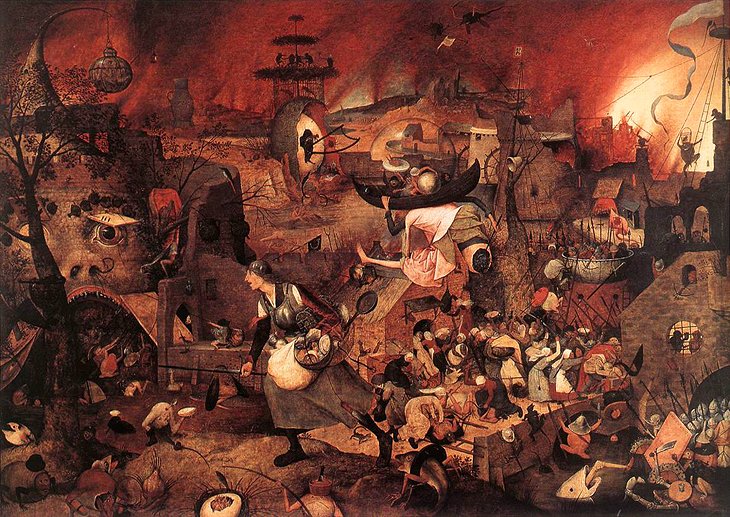
The collection includes some superlative works of art, among them paintings by Pieter Bruegel the Elder, (Dulle Griet and the earliest of the artist's signed works The Twelve Proverbs, both in Room 26), Rubens, Jordaens, Bouts, van der Weyden, van Ostade, Lucas Cranach, and Quentin Massys.
Also of great interest are the Flemish and French religious statues, the outstanding collection of ivories, and a unique 16th-century Flemish breviary, and in Room 14, a polychrome group Christ with St. John (1300) by Henry of Constance and a Netherlands diptych (ca. 1400).
The second floor features a collection of porcelain, while 17th-century furniture and paintings occupy the third.
Address: Lange Gasthuisstraat 19, Antwerp
Royal Museum of Fine Arts (Koninklijk Museum voor Schone Kunsten)
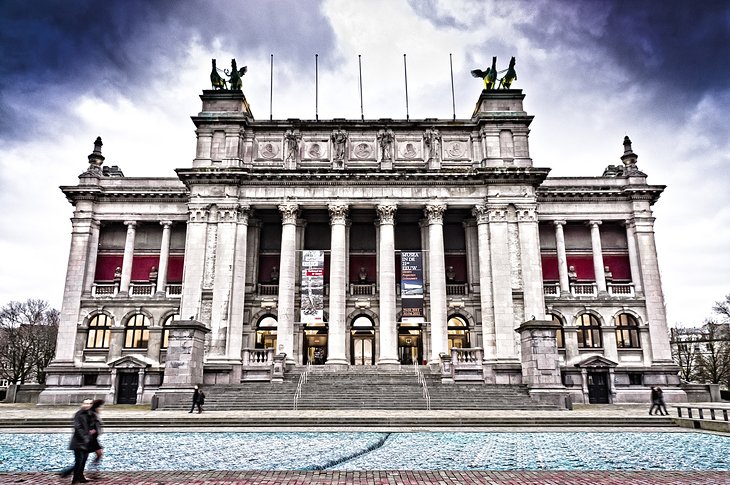
The nucleus of the collection inside the Royal Museum of Fine Art (Koninklijk Museum voor Schone Kunsten) belonged originally to the Lucas Guild of Painters and Sculptors, founded in 1442.
Following the winding up of the guild in 1773, the works of art accumulated over the years passed into the possession of the Academy of Fine Arts.
In the mid-19th century, however, the collection was swollen by a substantial number of new acquisitions, particularly gifts, mainly of 15th- and 16th-century paintings, from Florent van Ertborn, a former burgomaster of Antwerp.
The academy found itself with insufficient space to accommodate the enlarged collection and the decision was taken to build a new museum.
The collection is housed on two floors. The ground floor is largely devoted to 19th- and 20th-century paintings and sculpture, some 1,500 items in all, providing, among other things, an excellent overview of the development of the plastic arts in Belgium since 1830.
The exhibition of Old Masters on the first floor comprises more than 1,000 works, mostly from the Flemish and Dutch schools.
Address: Plaatsnijdersstraat 2, Antwerp
Official site: www.kmska.be/en/
Learn about Migration History at the Red Star Line Museum
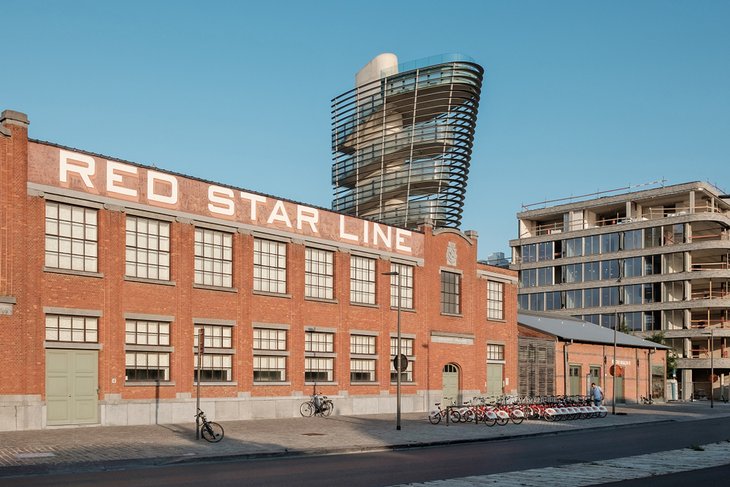
One of the newer tourist attractions in Antwerp, the Red Star Line Museum was opened in 2013 after over two decades of planning.
The Red Star company's steamers transported emigrants from Belgium and surrounding European countries between 1883 and 1934, bringing them across the ocean to Canada or the United States to escape persecution, poverty, and oppression.
The museum is dedicated to exploring not only the journey and process itself, but the reasons that people chose to leave their home in hopes of a better life.
Among the exhibits are the areas where passengers were selected for passage, some of whom were never given the chance to get aboard a ship. Areas of interest also include personal stories of those who did emigrate, and those who were left behind, and accounts of the passage across the Atlantic.
Address: Montevideostraat 3, 2000 Antwerp
Official site: www.redstarline.be/en
St. Paul's Church (Sint-Pauluskerk)
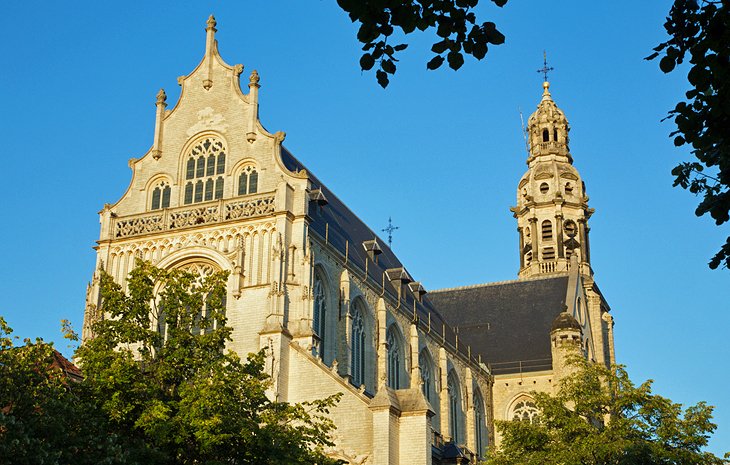
In the central city, the Veemarkt (the plaza that once functioned as a former cattle market) is home to the late Gothic St. Paul's Church (Sint-Pauluskerk), begun in 1517 and not completed until 1639. The Baroque clock tower dates from 1680.
A fire in 1968 badly damaged the church and only the spirited efforts of local people prevented the loss of valuable interior furnishings.
The church is home to paintings by Rubens, Jordaens, and Van Dyck. These include the superb Baroque confessionals by Pieter Verbruggen the Elder and three paintings by Rubens: The Scourging of Christ (1617) in the left aisle and the Adoration of the Shepherds and Disputation on the Blessed Sacrament in the left transept.
Address: Sint Paulusstraat 20/22, Central Antwerp
The Butcher's Hall (Vleeshuis)
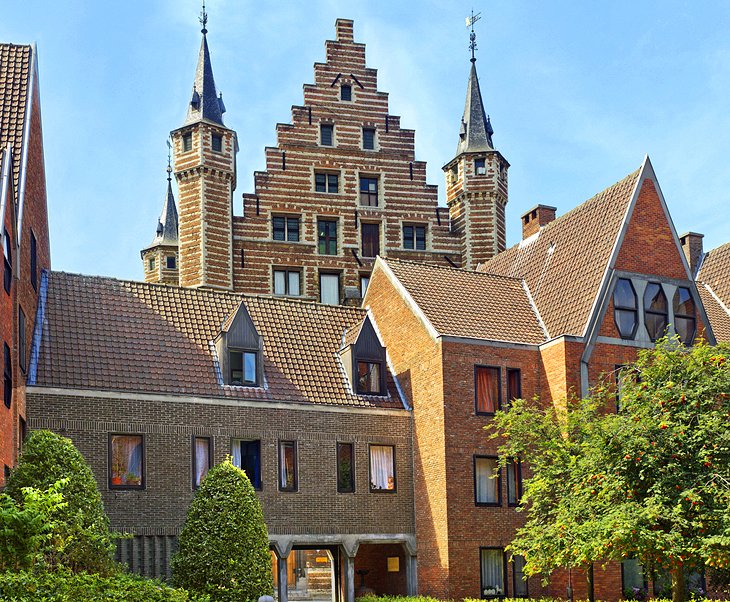
The elegant rooms of the late Gothic Butcher's Hall (Vleeshuis) include the former council chamber of the butchers' guild. The impressive brick building, built in 1501-04, was deliberately sited close to the Scheldt, allowing the blood of slaughtered animals to run off into the river.
The Vleeshuis is now a museum of applied art and archaeology with collections of prehistoric, Egyptian, Roman, and Merovingian artefacts; weapons and armor; ceramics; furniture; sculpture and woodwork; and coins.
Among its most prized possessions are a 16th-century depiction of the conversion of Saul created from Antwerp tiles known as the Averbode Retable by Pieter Coecke van Aelst.
The Vleeshuis is also home to an outstanding collection of musical instruments including the remarkable harpsichord from the workshop of Ruckers the instrument-makers.
Address: Vleeshouwerstraat 38-40, Central Antwerp
Check Out Antwerp-Centraal Railway Station
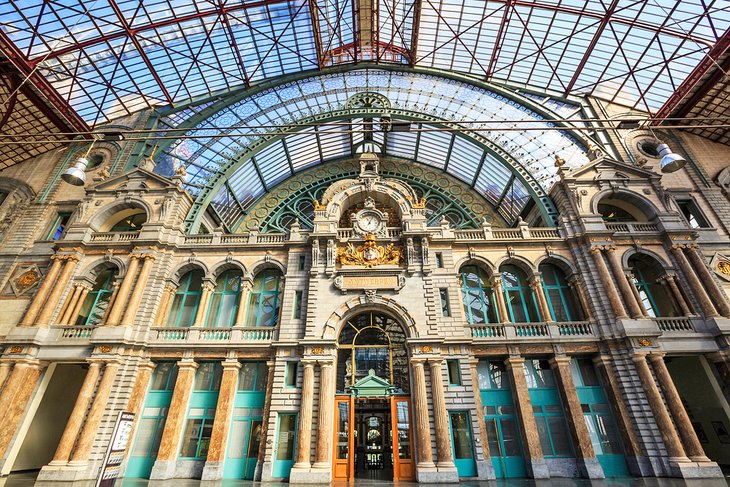
Antwerp's railway station (called both Antwerp-Centraal or Antwerpen-Central) is one of the most beautiful railway stations in Europe and is considered to be one of the most impressive train stations in the world.
Its nickname of the Railroad Cathedral is a testament to its grandeur, and even those who are not traveling by rail will appreciate a quick peek at its interior.
Built between 1895 and 1905, it is historically significant as the first station of Belgium's public railway, which was itself, the first of its kind in Europe. Belgian architect Louis Delacenserie cherry-picked from several different architectural forms in his design, resulting in a bold, dramatic building that has a timeless style all of its own.
The entrance hall, with its high brick arches and dome, is the grandest section of the station's interior and a regal introduction to Antwerp if you arrive by train.
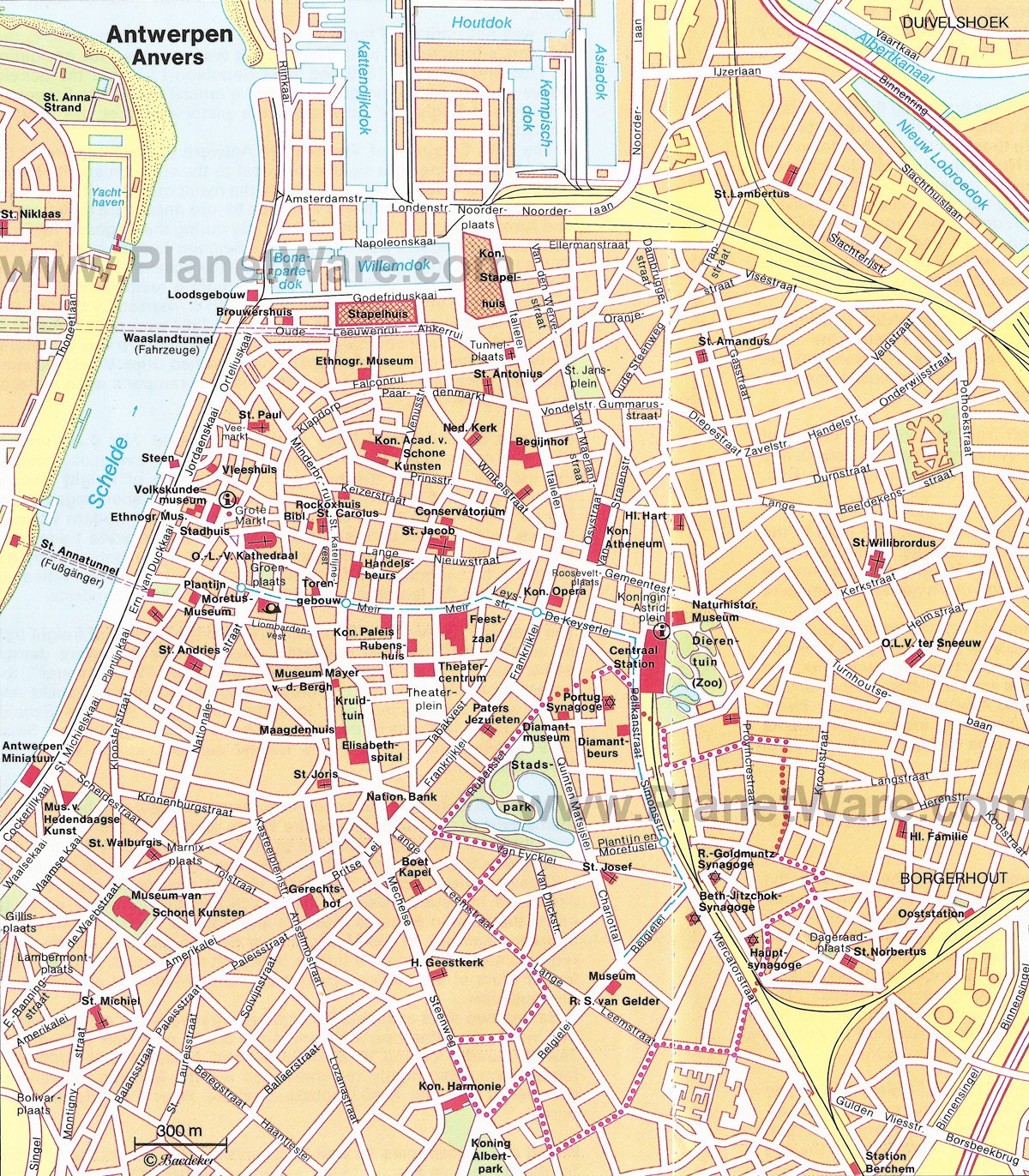
The station is an easy two-kilometer walk east from Antwerp's Grand Place in the old town, and just over one kilometer northeast from Ruben's House.
Address: Koningin Astridplein 27
Bike the Havenroute (Port Tour)
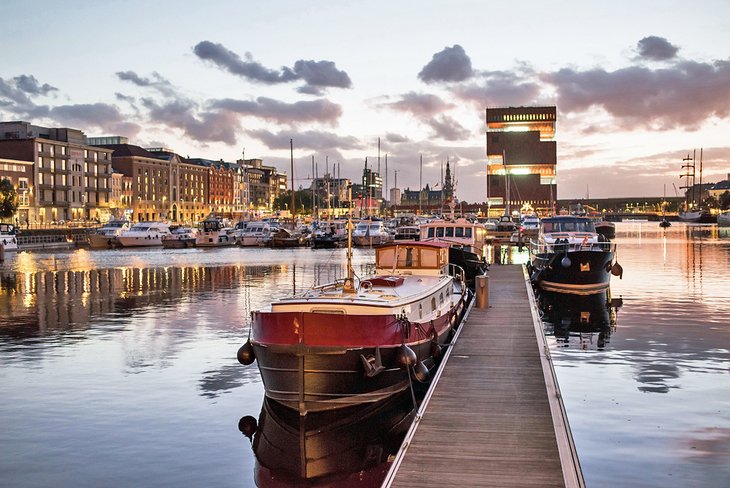
The Havenroute is a sightseeing tour of the port area, marked out by the Antwerp Tourist Office. The central city sections can be easily explored on foot, but if you want to follow more of the route, hire a bike.
The Port of Antwerp is second only to Rotterdam among the major seaports of Europe, fully justifying its claim to be one of the largest in the world.
The harbor installations alone cover an area of more than 10,000 hectares, with a further 3,400 hectares of land in industrial use.
Start the Havenroute tour of the docks area from the Loodsgebouw (Pilot House) on the embankment north of the Steen, from where the route heads northwards, passing almost immediately the two oldest docks, the Bonapartedok and Willemsdok, at the far end, where you can see the massive Koninklijk Stapelhuis.
If you have a car or a bicycle, the Havenroute heads out of the city, past the 17th-century Eenhoorn windmill to Lillo (16 kilometers northwest of Antwerp), one of the few polder villages to have survived engulfment by the port.
At Lillo, there is a choice between driving on to inspect the huge Berendrechtsluis, the world's largest lock, or shortening the tour by turning round and following the Havenroute south again towards Antwerp, via the Frans Tijsmanstunnel beneath the Kanaaldok.
Address: Port house, 1 Entrepotkaai, Antwerp
St. James' Church (Sint-Jacobskerk)
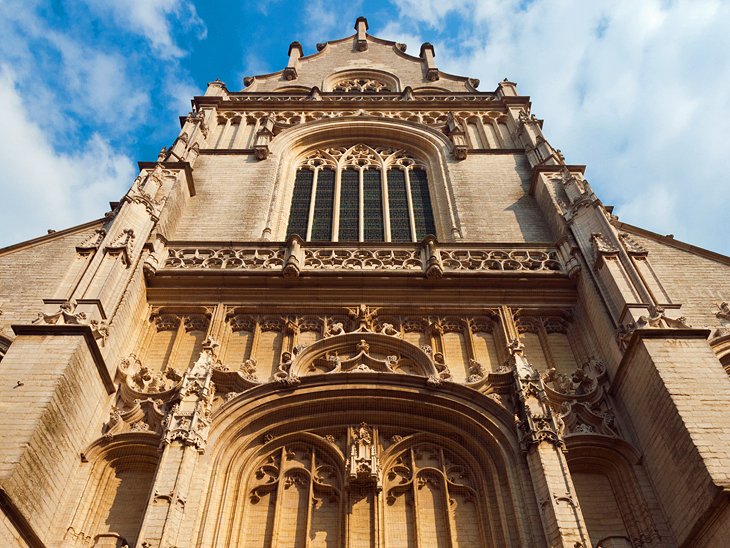
With its sumptuously ornate Baroque interior, St. James' Church (Sint-Jacobskerk) is one of the richest ecclesiastical buildings in Antwerp, blessed with an exceptional endowment of art treasures.
It was the church at which the city's patrician families worshipped, and they regularly commissioned leading artists to design their private chapels, altars, and tombs.
The Rubens Chapel provides the chief focus of interest for visitors. Located behind the high altar, it contains the tomb of the artist (1640) and those of other members of his family.
Address: Lange Nieuwstraat 73, Antwerp
DIVA (The Diamond Museum)
DIVA (Antwerp's museum of diamonds, silver, and jewelry) explores all the different aspects of the trade in diamonds, including sections on their extraction, processing, and industrial use.
It also focuses on Antwerp's long heritage of silversmithing craftwork and jewelry making and how that heritage led to the city's central role in the global diamond trade.
As well as displays of cut and uncut diamonds (genuine) together with copies of the more famous stones, the museum exhibits include a vast showcase of Belgian silverwork, from intricately embossed tableware to delicate jewelry.
The museum is temporarily closed for renovation until December 2022, but a pop-up DIVA museum, displaying a range of the museum's diamond and silver collection, is open in Antwerp's Grand Place (Grote Markt) for this period.
Address: Suikerrui 17/19
Official site: https://www.divaantwerp.be/en/
Antwerp, Belgium - Climate Chart
| Average minimum and maximum temperatures for Antwerp, Belgium in °C | |||||||||||
| J | F | M | A | M | J | J | A | S | O | N | D |
| 5 0 | 6 0 | 9 2 | 13 5 | 17 8 | 20 11 | 22 13 | 22 13 | 19 11 | 14 8 | 9 3 | 6 1 |
| PlanetWare.com | |||||||||||
| Average monthly precipitation totals for Antwerp, Belgium in mm. | |||||||||||
| 66 | 53 | 74 | 58 | 71 | 79 | 76 | 64 | 58 | 71 | 79 | 76 |
| Average minimum and maximum temperatures for Antwerp, Belgium in °F | |||||||||||
| J | F | M | A | M | J | J | A | S | O | N | D |
| 41 31 | 43 32 | 48 35 | 54 40 | 63 46 | 67 51 | 71 54 | 71 54 | 66 50 | 57 45 | 48 37 | 42 33 |
| PlanetWare.com | |||||||||||
| Average monthly precipitation totals for Antwerp, Belgium in inches. | |||||||||||
| 2.6 | 2.1 | 2.9 | 2.3 | 2.8 | 3.1 | 3.0 | 2.5 | 2.3 | 2.8 | 3.1 | 3.0 |
More Related Articles on PlanetWare.com

Ghent's Flemish Flair: Home to some of Belgium's most impressive architecture, Ghent can be explored easily on foot or by canal. Less tourist-filled than many other historic Flemish cities, this is a good place to go to get a feel for authentic culture.
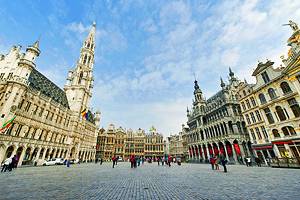
Bustling Brussels: Like Antwerp, Belgium's capital city of Brussels is home to several fine museums among its many tourist attractions. Tourists visiting Brussels will find a modern and busy city filled with excellent restaurants and cafés.
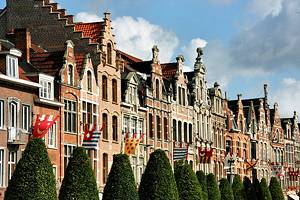
Lovely Leuven: Home to one of Europe's most prominent universities, Leuven (Louvain, in French) sits east of Brussels on the banks of the Dijle. Despite damage done during the World Wars, Leuven still has many of its original historic buildings, including fine examples of Gothic architecture.
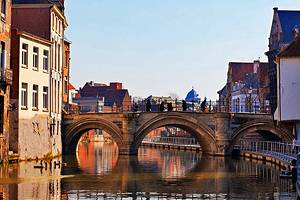
Day Trips from Antwerp: In addition to the larger cities nearby, those looking for good day trip options from Antwerp have plenty of options to choose from, including the beautiful towns of Mechelen, Lier, and Turnhout.